Tuesday, April 4, 2017

LAD #37: Brown vs. Board of Education


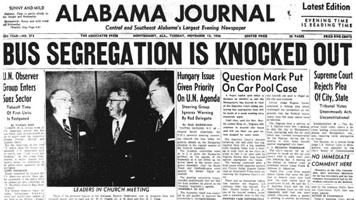
The decision to desegregate buses from the Montgomery Bus Boycott relates to Brown v. Board of Education because both desegregated aspects of America.


Brown vs. Board of Education Summary:  Racial segregation in public schools was the norm across America in the early 1950's. Although all schools were meant to be equal, the black schools were often much worse. A little black girl from Topeka, Kansas, named Linda Brown was forced to walk one mile through a railroad switch yard to get to her black school, even though there was a white school very close to her house. Her father attempted to enroll her in the white school but she was denied. Brown went to the head of Topeka's branch for the NAACP and they were eager to help her. They first took their argument to the District Court for Kansas and claimed that segregated schools sent the message to black children that they are inferior  and therefore the schools are unequal. The Board of Education claimed that the segregation in schools would prepare black children for the segregation they would face later in life. They also claimed that segregated schools were not necessarily harmful to black children, using Frederick Douglass, Booker T. Washington, and George Washington Carver as examples. With this evidence and the precedent of Plessy v. Ferguson, the court ruled in favor of the Board of Education. Brown and the NAACP appealed to the Supreme Court and they combined their cases with some other around the country. At first the Supreme Court did not come to a decision. However, om May 17, 1954, the Court came to a unanimous decision that the doctrine of "separate but equal" does not apply to public education, requiring the desegregation of schools around America. This was a giant step towards complete desegregation  of public schools but we were still far away from it.

Sunday, March 26, 2017

LAD #36: The Truman Doctrine


The Bush Doctrine relates to the Truman Doctrine in the fact that it states that the US will help to fight against a certain group that they see as dangerous, Bush fighting terrorism and Truman fighting communism.


The Truman Doctrine Summary: During Harry Truman's address to a joint session of Congress in which he introduces the Truman Doctrine, Truman first states the problems facing Greece and Turkey, elaborates on what complicates these problems, and finally suggests a solution. Obviously, the problem facing Greece and Turkey was economic instability, which was rampant in the war torn areas and even threatened to derail their governments. However, this problem was complicated by whom was derailing these governments, communist rebels. True to the spirit of the Cold War, this was not mentioned directly, but only in passing. Still, everyone in the room knew what Truman was talking about, just like the US and USSR always understood each other's diplomatic maneuvering. As the US would do for much of the War, this speech actually spent more time trying to paint the conflict as one of Democracy vs. Totalitarianism than as one of competing economic systems. For instance, Truman mentions that the coalition governing Greece at the time represented 85% of the parliament members elected the year before. With these things in mind, Truman suggested a move that would be very similar to the policy the US would follow through the rest of the Cold War, giving aid to nations to fight communism and make it less appealing.

Sunday, March 12, 2017

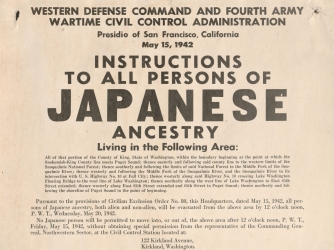
LAD #35: FDR's Executive Order #9066


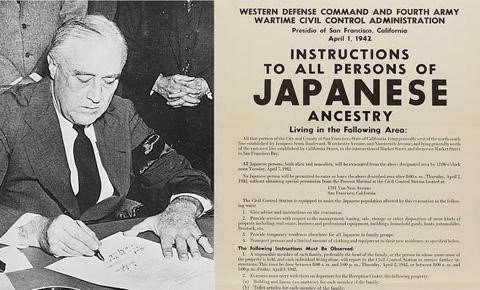
The Dawe's Act is similar to FDR's Executive Order #9066 because both forced a specific group of people into a confined amount of land based on their ethnicity.


FDR's Executive Order #9066 Summary: President Franklin D. Roosevelt made the Executive Order #9066 on February 19th, 1942. This order stated that as a precautionary protection against any acts of Espionage towards the United States, all Japanese persons were to be put in internment camps across the United States. It gave the Secretary of War and Military Commanders the power to create designated military zones, where all their necessary needs would be taken care of by Federal Agencies. These agencies provided food, shelter, equipment, land and much more.

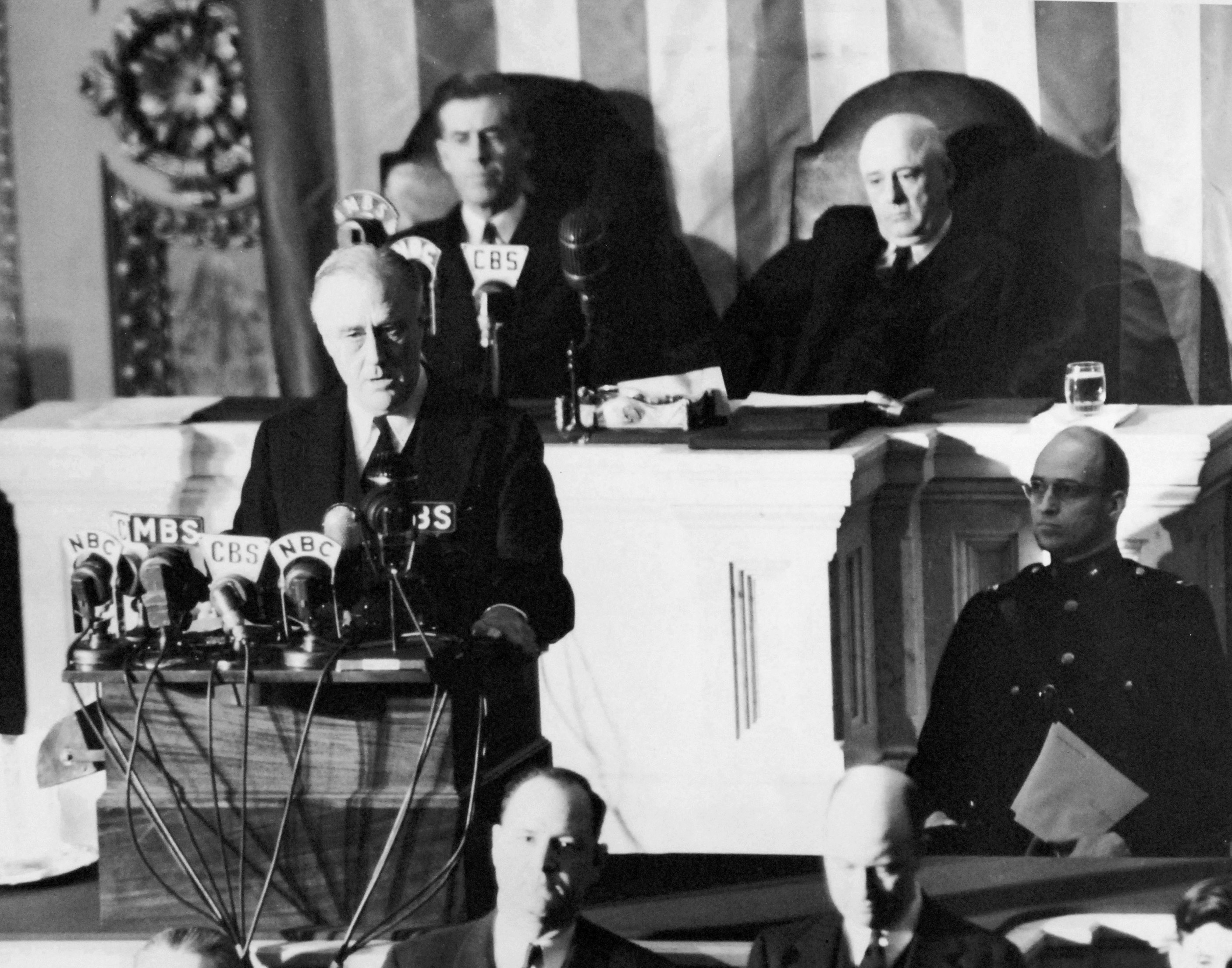
LAD #34: FDR's Declaration of War


Woodrow Wilson's Declaration of war is similar to FDR's declaration of war because both were declaring to enter into major world wars and both were more or less started because of attacks on US citizens.


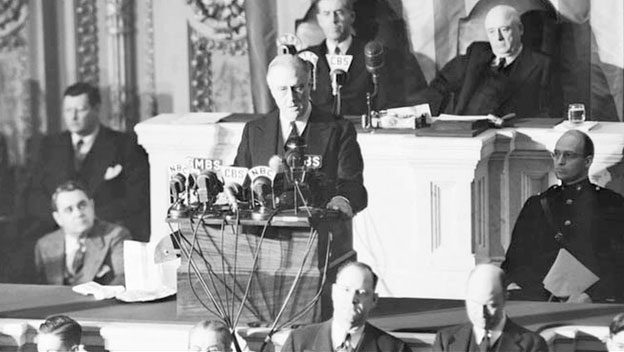
FDR's Declaration of War Summary: The beginning of FDR's declaration of war opens by discussing the events that took place on December 7, 1941. He talks about the Japan plan to attack Pearl Harbor despite trying to deceive the American government into thinking peacefully. The surprise attack killed thousands of Americans and destroyed military equipment. Japan also launched attacks on numerous other places, including Guam and the Philippine Islands. President Roosevelt went on to say that the American people have formed their opinions and are ready to take the necessary measures to defend the safety of the country. The people, territories, and interests of the United States are in danger. FDR asks Congress to declare war on Japan with confidence that the United States will be victorious. 

Monday, March 6, 2017

LAD #33: FDR's First Inaugural Address


Ronald Reagan's First Inaugural Address relates to FDR's First Inaugural Address as both were taking office in times of economic hardship and their speeches both focused on the economy quite a bit.


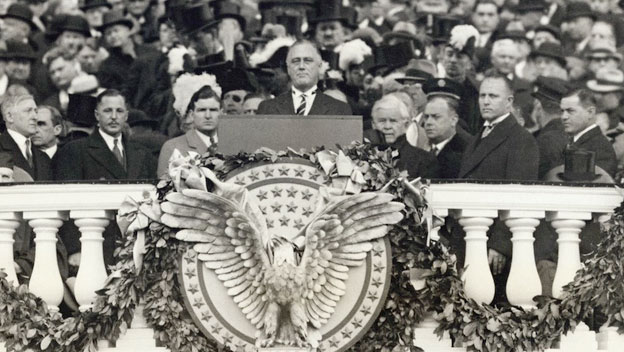
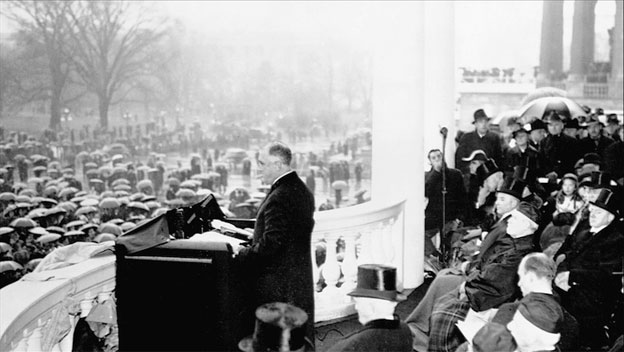
FDR's First Inaugural Address Summary: FDR begins his speech with the famous quote "the only thing we have to fear is fear itself". With FDR coming into the Presidency with the in a depression, he made it his main goal to boost moral and to get the country back on their feet. In hopes that he would encouraged those who were at the time discouraged, he focuses on social aspects rather than economic turmoil and claims happiness does not lie in "the mere possession of money". FDR insured the public not to worry and suggests several solutions to the ever growing problem. One being the strict regulation of banks, jump start spending, investments, establishing a sound basis of currency, and ending the speculation. It was important for the banks to regain trust of the citizens if the economy was ever going to jump start itself. FDR urged people to use the banks and spend even amidst the depression because that is the only way that it would ever get better. Again focusing on the economy, he passes the "Good Neighbor Policy" meaning that America will respect the rights of other countries and devote their efforts to rebuilding the American economy.

LAD #32: Kellogg Briand Peace Pact


The United Nations relates to the Kellogg Briand Peace Pact because both were/are a group of countries that came together to try and keep peace.

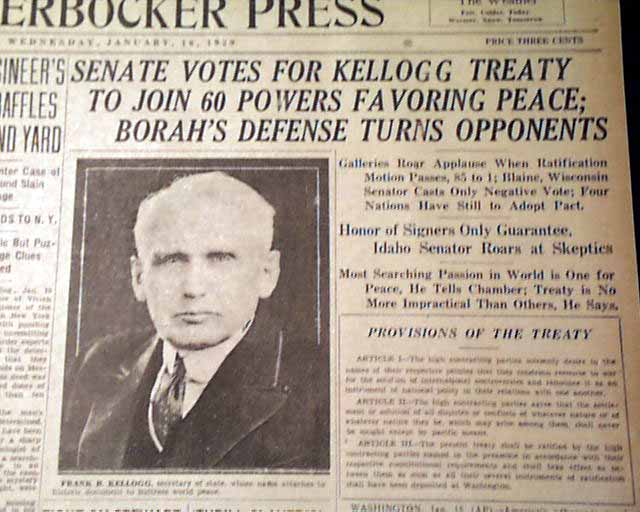
Kellogg Briand Peace Pact Summary: The Kellogg-Briand Peace Pact was passed in 1928 by nations such as Germany, France, and the United States. The intentions of this pact were good, but that didn't stop it from being an utter failure. The pact was made in an attempt to create a much more peaceful world by making the countries who signed it, agree to denounce war as a foreign policy or a way of solving disputes. The whole point of it was to get countries to work out their issues diplomatically, rather than through war. The United States took unofficial leadership in following through with the treaty and other countries were allowed into it as well. The reason that it was unsuccessful, however, was that the only way that a country can really enforce an international agreement is if it has the military force to back up the agreement. This pact did not allow for a military to go to war to settle conflicts, so therefore it couldn't settle a conflict if a country broke the pact.

Monday, February 13, 2017

LAD #31: President Wilson's 14 Points


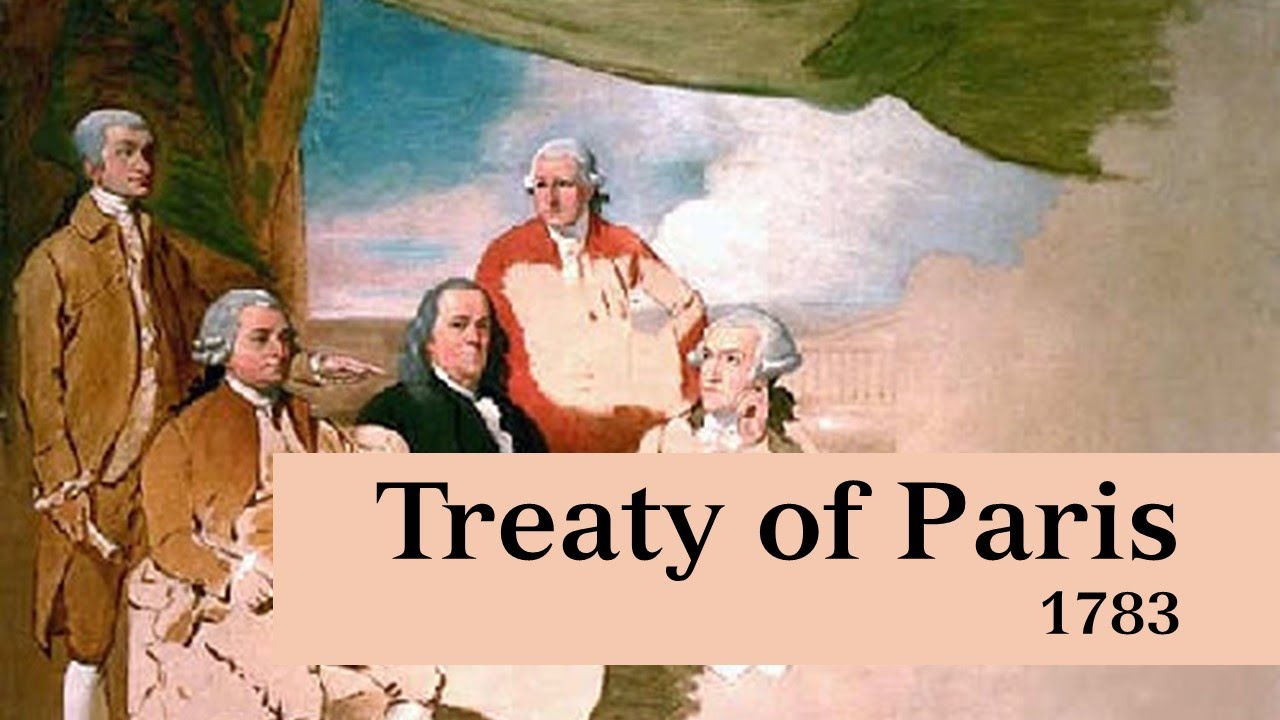
Wilson's 14 Points relate to the Treaty of Paris of 1783 because both negotiated peace to end a major war.

President Wilson's 14 Points Summary: Wilson begins by addressing the Congress saying that the countries of the Central Empires want to negotiate peace. Russia had also outlined what they thought the peace treaty should include. The United States would like to be able to help the Russian people attain their hopes for liberty and peace. Wilson wants to make sure that all secret covenants are gone. Wilson just wants it so the world is fit and safe to live in and to achieve this all of the countries will have to work together. His 14 points include, diplomacy being available to the public, absolute freedom of the seas, equal trade and the removal of economic barriers, guarantees that the national military will be reduced to the lowest point to keep domestic safety, as well as a open mind about colonial claims. They also include giving freedoms to Russia and allowing them to join the society of free nations, Belgium will be evacuated and restored and its freedom shall not be limited, all French territory should be freed and restored including Alsace-Lorraine, most nations that were involved are to be evacuated and restored, and finally an association of nations is to be formed under specific covenants for the purpose of mutual guarantees of political independence and territorial integrity. He doesn't even want to really hinder Germany at all as long as they want to join with the other peaceful nations.

Wednesday, February 8, 2017

LAD #30 Schenck vs. US


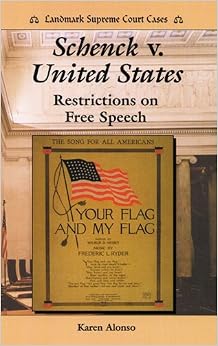
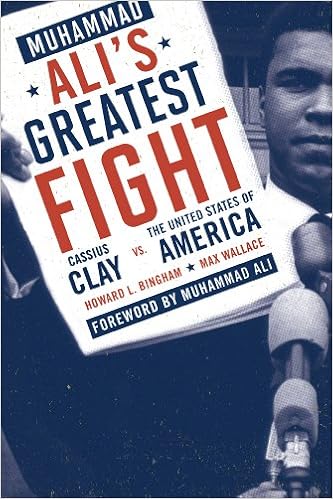
The Clay v. US case is very similar to the Schenck v. US case because both were against the draft and going to war.

Schenck vs. US Summary: During WW1 sent things to draftees that suggested that the draft was a monstrous wrong motivated by capitalism. In order to repeal the draft, he urged people to use peaceful action such as petitions. Schenck was charged with conspiracy to violate the Espionage Act by attempting to cause defiance in the military and to stop recruitment. The question was, however, did the Free Speech Clause of the First Amendment protect Schenck's actions? Speaking for a unanimous court, Holmes concluded that he was not protected in this situation. He explained this decision by saying that it depends on if the actions "create a clear and present danger" and bring about the "substantive evils that Congress has a right to prevent". Which basically means that if the actions could create problems, in this case civil unrest or lack of a military, then Congress has the right to stop these actions from happening, especially in a time of war.

Sunday, January 22, 2017

LAD #29: Keating-Owen Child Labor Act


The Fair Labor Standards Act relates to the Keating-Owen Child Labor Act because both regulate labor and make for more fair and humane working conditions.

Keating-Owen Child Labor Act Summary: After the 1900 census revealed that 2 million children were working in factories, mines, fields, and stores across the country, the nation was outraged. Social workers and other prominent individuals began to condemn the treatment of children in workplaces given its negative effect on their health and over all well-being. The Keating-Owen Child Labor Act was passed in response to this outcry for a solution. The act established the age of 14 as the minimum for work and 16 as the minimum for work in mines. In addition, children could only work a maximum of 8 hours per day. Unfortunately, the Supreme Court declared this law unconstitutional in the Hammer v. Dagenhart case. The Supreme Court ruled that the government did not have the right to regulate commerce. An amendment was proposed in the 1920's regarding child labor which also failed. Finally, in the 1940's the Supreme Court reversed their ruling. This decision stands today.

LAD #28: Wilson's First Inaugural


Obama's First Inaugural Address relates to Wilson's first Inaugural Address because both speak about what their plan is for America going forward to improve it from where it was before.


Wilson's First Inaugural Summary: In his First Inaugural Address, Wilson spoke about the morals of the American people and the need for change in society. He first talked about how successful the Industrial Revolution was, but he also addresses the underlying issues it caused. The boom in industry had lead to much corruption, which needed to be combated. He spoke of "the human cost, the cost of lives snuffed out, (of) energies overtaxed and broken". He also admitted that the government "has too often been made use of for private and selfish purposes" and he is essentially stressing the need for reform. He promised reforms such as sanitary laws, pure off laws, and laws regarding conditions of labor. These promises were carried out through the Pure Food and Drug Act passed during his administration. He desired to restore the nation, rather than destroy it. Although he acknowledged that the nation is in need of a serious makeover, he conveys a message of hope for reform for his presidency.
LAD #27: Clayton Anti-Trust Act


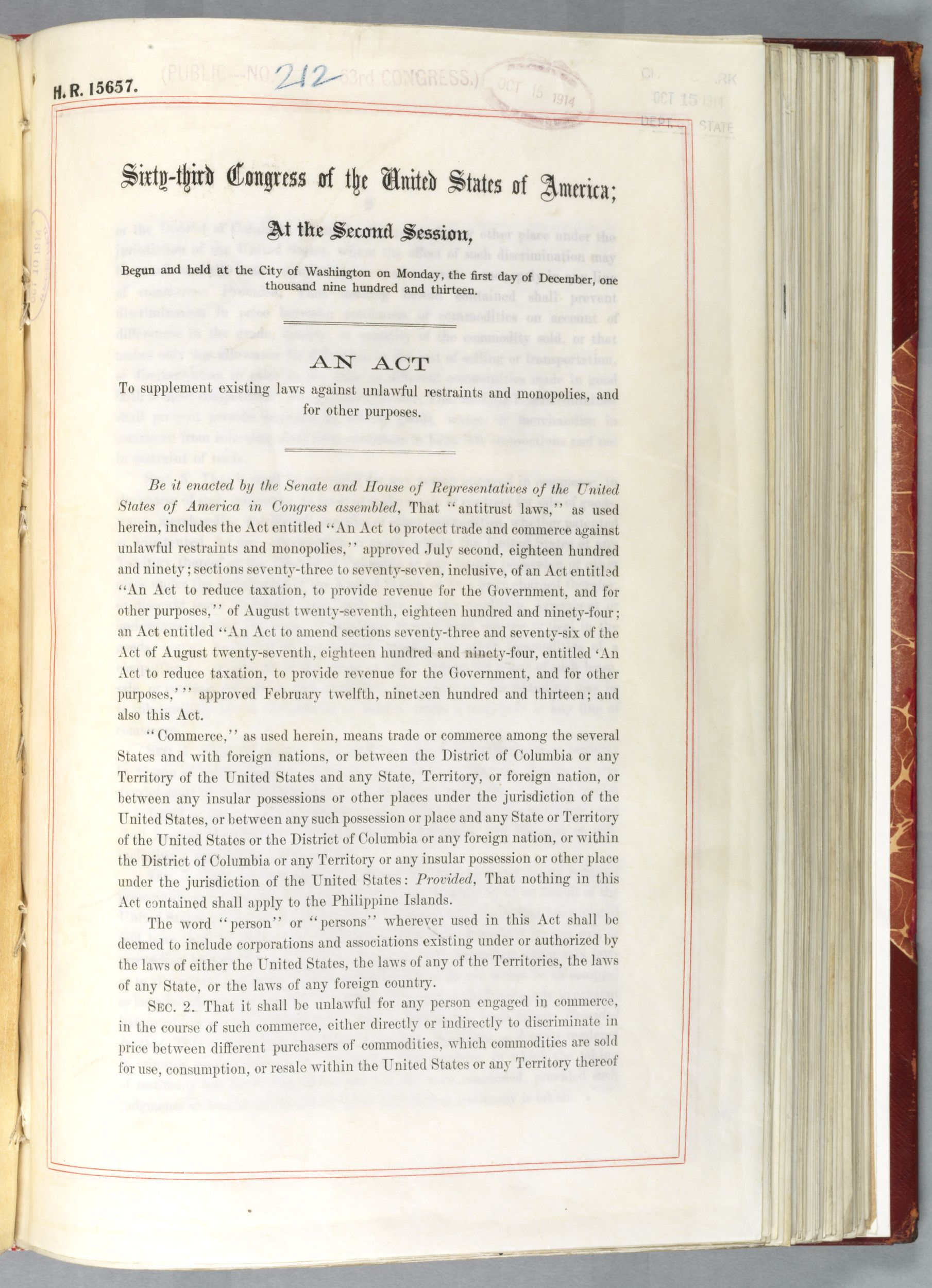
The Clayton Anti-Trust Act relates to the Fair Packaging and Labeling Act because both regulated businesses so that they don't cheat consumers.


Clayton Anti-Trust Act Summary: The Sherman Anti-Trust Act of 1890 was largely ineffective, bringing need for the Clayton Anti-Trust Act of 1914. One of the main points of this Act was the assertion that businesses could not charge customers different prices for the same product. This served to limit the monopolistic practices, especially by Rockefeller with the railroads, of charging different prices to different customers. It was made clear though that this Act would not limit a business's ability to selectively choose customers. The Act also disallowed companies to shift prices and the eliminate the weak as had been done before. The last point of the act was the outlawing of restrictive mechanisms such as "pyramid business", in order to promote free trade and prevent the lessening of competition.

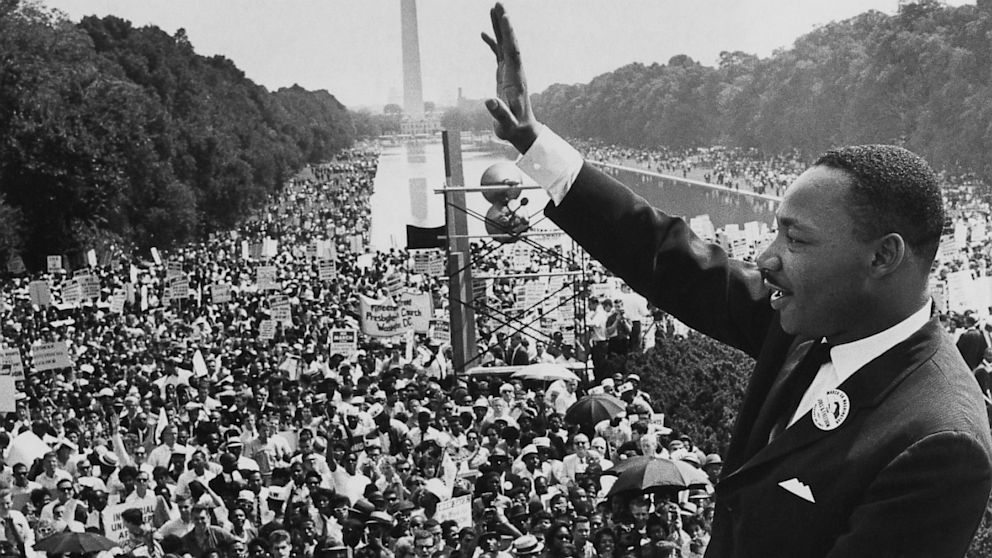
LAD #26: MLK's 'I Have a Dream' Speech


MLK's I Have a Dream speech relates to Obama's keynote speech in 2004 because both are important and great speeches in America's history and talk about prevalent problems of the day.


MLK's 'I Have a Dream' Speech Summary: Martin Luther King Jr.'s "I Have a Dream" speech is one of the most well known and inspiring American speeches. He begins his speech by alluding to Lincoln's Emancipation Proclamation, and saying that even though the slaves are free, "one hundred years later, the Negro is still not free". He then explains that after 100 years, the situations of black people in America have not gotten to "equal" yet like they were supposed to. MLK Jr. then references the Declaration of Independence and proves that he rights of do not hold up for blacks. He argues that the nation must change and that Civil Rights must be given. He then repeats the famous line "I have a dream..." and effectively uses this pattern with heartfelt words that move the American public. One particularly important part is where he says the he has "a dream that my four little children will one day live in a nation where they will not be judged by the color of their skin, but by the content of their character". He concludes this speech with a call for the blacks to be "Free at last!".

Thursday, December 22, 2016

LAD #25: Dawes Severalty Act


Although the situations were very different with the reasoning behind the two, the forceful moving to a confined area of the Japanese internment camps is similar to the Indian reservations.


Dawes Severalty Act Summary: This act was established in regards to Indian policy, more specifically, how reservations would be divided. This policy focused on on breaking up reservations by granting land allotments to individualize Native Americans. The head of each family was given 1/4 of the land, single children over the age of 18 1/8, to each orphan child under 18 they would get 1/8 of a section, as well as every other single person under 18. Lands that were not given to the Indians were open to non-Indians and the development of railroads. Even if the Native Americans did not live on that land they were given as a patent for the government to protect it. The act emphasized individual ownership of land, which contrasted with the traditional unity of the culture. The act ultimately tried for assimilation and deprived the Indians of their land for the need of railroads and the development of infrastructure.


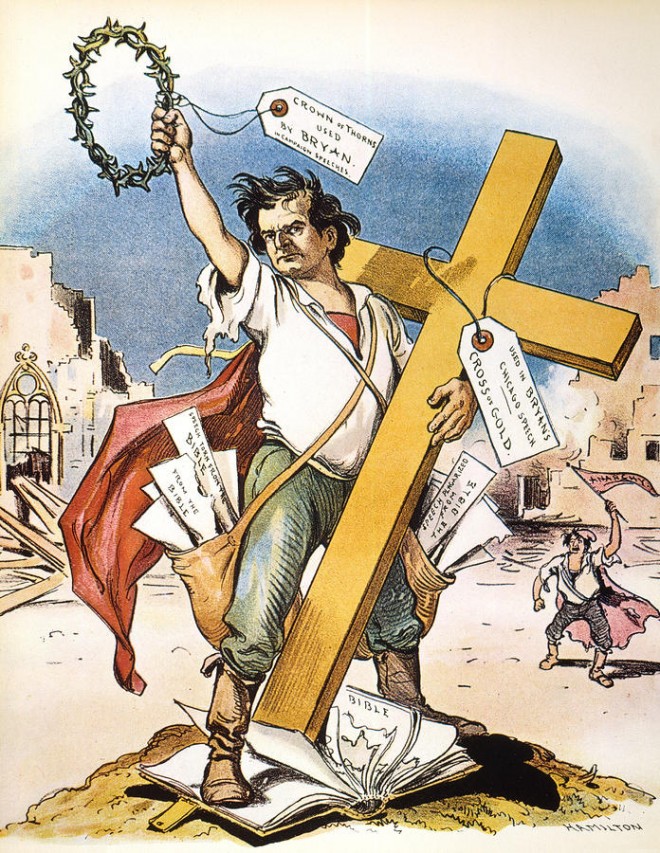
LAD #24: William Jennings Bryan's Cross of Gold Speech


In his speech, Bryan directly compares what he wants to happen, gain independence from the corrupt, controlling government, to the Declaration of Independence, when they fought for independence from a corrupt government as well. 


William Jennings Bryan's Cross of Gold Speech Summary: Bryan opens by saying that, as a person, he could run for the Democratic nomination. He claims, however, that the race is a matter of principle, and that it is the humanitarian principle which he supports that is running. He also claims that every working man is a business man, and that the Westward-moving pioneers are as supported by the party as the Eastern Elite. He continues by saying that he defends families against the "encroachment of aggregated wealth". He supports the income tax law that was recently found to be unconstitutional by the Supreme Court. He went against his Democratic beliefs by supporting the governmental control of money and banking. He discusses the large issue of silver not being backed the same way that gold is and how the Republican nominee, McKinley is losing popularity because his party endorsed the gold standard and left out silver. Because of this, he is confident in his party winning the election. He competes his speech by saying that the Democratic party will support the struggling, poor workers who create the country's wealth and that the US should turn to bimetalism (using silver and gold) before other nations have the chance to and lead the world. He finishes the whole speech by saying "you shall not crucify mankind upon a cross of gold".

LAD #22: President McKinley's War Message


FDR's Infamy speech is related to McKinley's War Message because both times Presidents were asking for more Congress to allow them to declare war.


President McKinley's War Message Summary: There was a bloody war occurring in Cuba against the Spanish and the US was sick of it so they demanded that the Spanish stop the fighting. The Spanish accepted these demands. McKinley wanted all the conflict in Cuba to stop and he told Congress to act on it. On April 19, Congress adopted a joint resolution which plunged the US into war on the side of Cuba. 

It was his duty to inform the Congress on the state of relations of the United States with Spain and of the warfare in Cuba. The current revolution is a build-up of other similar insurrections which have occurred in Cuba against Spain. Our trade has suffered do to it and much of the capital invested in Cuba has been lost. The war in Cuba is of the sort where neither side looks as they will win or lose until the physical exhaustion of one or both is achieved. In this regard being idle and issuing a proclamation of neutrality would be a bad idea. There remain forms of intervention, however, such as impartial neutrality by imposing a rational compromise between the contestants, or as the active ally of the one party or another. The first one would be helpful in keeping friendly relations with both Cuba and Spain, yet the second one may be more useful in actually causing eventual peace and ending all conflict. He goes on to list all the reasons why the second option is possible and may be necessary. One of the important reasons he list is that the battleship Maine was destroyed by an external submarine which proves the amount of violence in Cuba. In the name of humanity, in the name of civilization, in behalf of endangered American interests which give use the right and duty to speak and to act, the war in Cuba must stop. He then asks the Congress to allow hi to take measures to assure end the hostilities and assure peace on Cuba. 

LAD #23: The Populist Party Platform


Today's Democratic Party is similar to the Populist Party because they fight for better minimum wages, protecting workers rights, and closing wage gaps.


The Populist Party Platform Summary: The Populist Movement emerged from the farmers alliances of the 1870's and 1880's. In the 1890's it emerged as a viable third party as it was a response to the growth of industrialism. It opposed the concentrated capital of banks and big businesses.

It begins with a preamble which states that the nation is on the verge of moral, political and material ruin. There is corruption throughout and the public doesn't have a say. The right to unionize is denied and the conditions of work are left awful. The value of silver has gone down to make way for gold which is controlled and is hurting the people. There are controlling influences dominating both parties and they are willing to sacrifice our well being to make more money. We believe that the power of the government should be expanded in order to end this oppression, and corruption.

Their platform is this... that labor Unions are permanent, wealth goes to he who earns and creates it, and the government should own and manage railroads. When it comes to finance, they demand a national currency that is safe and sound and issued by the government. There should be free and unlimited coinage of silver and gold at the ration of 16 to 1, the amount of circulating money is to be increased, an income tax is to be implemented, the money should be kept as much as possible in the hands of the people and the state and national revenues are to be limited, and postal savings banks are to be established for the safe deposit of peoples earnings. In terms of transportation... the government should own and operate the railroads in the interest of  the people as well as the telegraph and the telephone. For land, it is the heritage of the people and it should not be monopolized, and the alien ownership of land should be prohibited, land owned by railroads and aliens should be returned to the government and reclaimed for actual settlers.

There is also an expression of sentiments with some of the big points being, fair elections, income taxes, pensions for ex-Union soldiers, protecting American labor, create better working conditions, presidents and vice-presidents should only be able to have one term, and national aid for private corporations should be forbidden.

Thursday, December 8, 2016

LAD #21: Carnegie's Gospel of Wealth


The Bill and Melinda Gates Foundation relates to the Gospel of Wealth in that Bill Gates as an incredibly wealthy person created a charity in which he donates very large amounts of money to for a good cause.


Carnegie's Gospel of Wealth Summary- Andrew Carnegie was an incredibly successful businessman who's wealth was based on the provision of iron and steel to the railways. To resolve what might have been seen as contradictions between creation of wealth and and social provision, he came up with the "gospel of wealth". He gave away his fortune to socially beneficial projects, such as libraries.
        The problem with the age in which he lived is the administration of wealth. The conditions of human life have not only changed, but they have been revolutionized. In the past there was little difference in wealth and social class, now a days there is a huge contrast in wealth and visible social class. This change, however, should be seen as beneficial and essential for the progress of the human race. A relapse to old conditions would be disastrous.
         The condition of affairs that is best for the interests of the race will inevitably give wealth to the few. The question is, what is the proper mode of administering wealth. There are three modes in which surplus wealth can be disposed of. It can be left for the families of the decedents; it can be bequeathed for public purposes; or it can be administered during their lives by its possessors. The first mode is the most injudicious and very monarch like. The second mode, it may be said that this is only a means for the disposal of wealth as it is no real good to the world until his death.  With this the estate of the person is often taxed very heavily after their death. This policy would work powerfully to push very wealthy people to attend to the administration of wealth during his life which would be the most fruitful for the society and people. He then says that this way of society where a few have great wealth is needed otherwise it would be similar to Communism in the fact that all the money would be equally distributed. It can be a much more powerful force for the elevation of our race. Even the poorest can be made to see this, as great sums gathered by few and spent for public purposes, for which the masses reap the benefit, are much more valuable than if the wealth was scattered among them. This is the third mode of using great fortune and by far the best for everyone involved.
          The duty of people of wealth is to first set an example of modest living, and to consider all surplus revenues that come to him to be trust funds of which he should administer in the manner of which their judgement sees as producing the most beneficial result for the community.

Sunday, November 27, 2016

LAD #20- Emancipation Proclamation


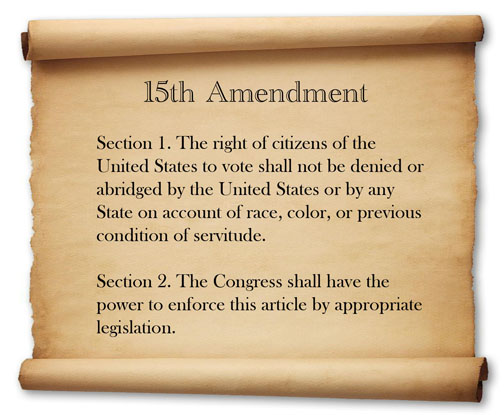
The 15th Amendment relates to the Emancipation Proclamation because it continued the idea of freeing slaves and giving them the freedoms and rights they deserve including the right to vote.


Emancipation Proclamation Summary- It was written in September of 1862 and the first thing that it says is that on January 1st of  1863, all slaves within any part of the country that rebelled are to be free forever. The Federal Government will also be sure to recognize and maintain their liberties as well. Also on the first day of 1863, every state, including the states that rebelled, are to have a representative in congress. On this same day for 100 days after, the States that rebelled shall be left exactly as if the proclamation were not issued. He then continues to push the point that all slaves are to be set free and the authorities will recognize this fact. To the people that are to be freed, they should abstain from violence unless it is necessary for self-defense. Lincoln also recommends that they labor faithfully and for reasonable wages. He also wants to make known that all former slaves of suitable conditions will be received into the armed forces. He sincerely believed this act to be one of justice warranted by the Constitution.

LAD #19- Lincoln's 2nd Inaugural


FDR's fourth inaugural speech relates to Lincoln's 2nd because both presidencies are taking place on the finishing ends of a war.


Lincoln's 2nd Inaugural Summary- Seeing that this was his second inaugural address, there wasn't nearly the same need for it to be long and drawn out rather just a statement with details on the course he plans to pursue throughout his presidency. He then mentions the civil war saying that it has absorbed the attention and energy of our nation. The progress of the the nations arms is well known and there is high hope for the future. In his first inaugural address, all of the thoughts were directed towards the impending civil war. Everyone was dreading it and they all wanted to avert it as well. There were people who were devoted to saving the Union without war,as well as people seeking to dissolve it without war. War came anyway as neither side wanted to give up their argument. One-eighth of the entire population were slaves, localized in the southern part of the country. These slaves had a powerful interest that was largely the cause of war. Neither party expected the war to have the magnitude or duration it ended up having. And no one anticipated the fact that the cause of the conflict might cease before the conflict. He then relates the Civil War to a quote from the bible. Saying that God has given us a war because of the offense of slavery. God has malice towards none, and charity for all. He wants us to finish the work we are in, to bid up the nation's wounds, to care for the people who took part in the war and for his widow and his orphan. And finally to achieve and cherish a lasting peace among ourselves and with all nations.

Sunday, November 20, 2016

LAD #18: Dred Scott Decision


The Ableman v. Booth case relates to the Dred Scott decision because both decisions changed the the thing they were discussing back to the way they were.


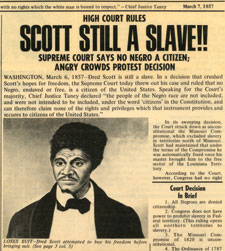
Dred Scott Decision Summary: Originally, the court favored a moderate decision that ruled in favor of Sanford, but it still didn't address the larger issues of black citizenship and the Missouri Compromise. Justice Nelson was chosen to write the decision, however no one agreed with his views. So, Chief Justice Roger Taney was chosen to write the majority opinion of the court which included black citizenship and the Constitutionality of the Missouri Compromise. President James Buchanan contacted several Supreme Court members for the decision reached by the Court to include in his inaugural address. In his speech he supported the decision of the Court. Taney presented the opinion in March of 1857. He started with the question of black citizenship of both slaves and freemen. Taney believed that even free blacks were not citizens of the United States, and do not have the power to sue. He also believed that citizens are allowed to bring their property into a territory in the US. He claimed that Missouri Compromise was unconstitutional because it prevented citizens from holding property. Finally, Taney said that the status of the slaves who escaped to free states must be returned to the place in which they resided, so therefore Dred Scott was still a slave and had to return to Missouri.